Couture
WORLD
The Structure Issue
The Structure Issue
01
Half Page
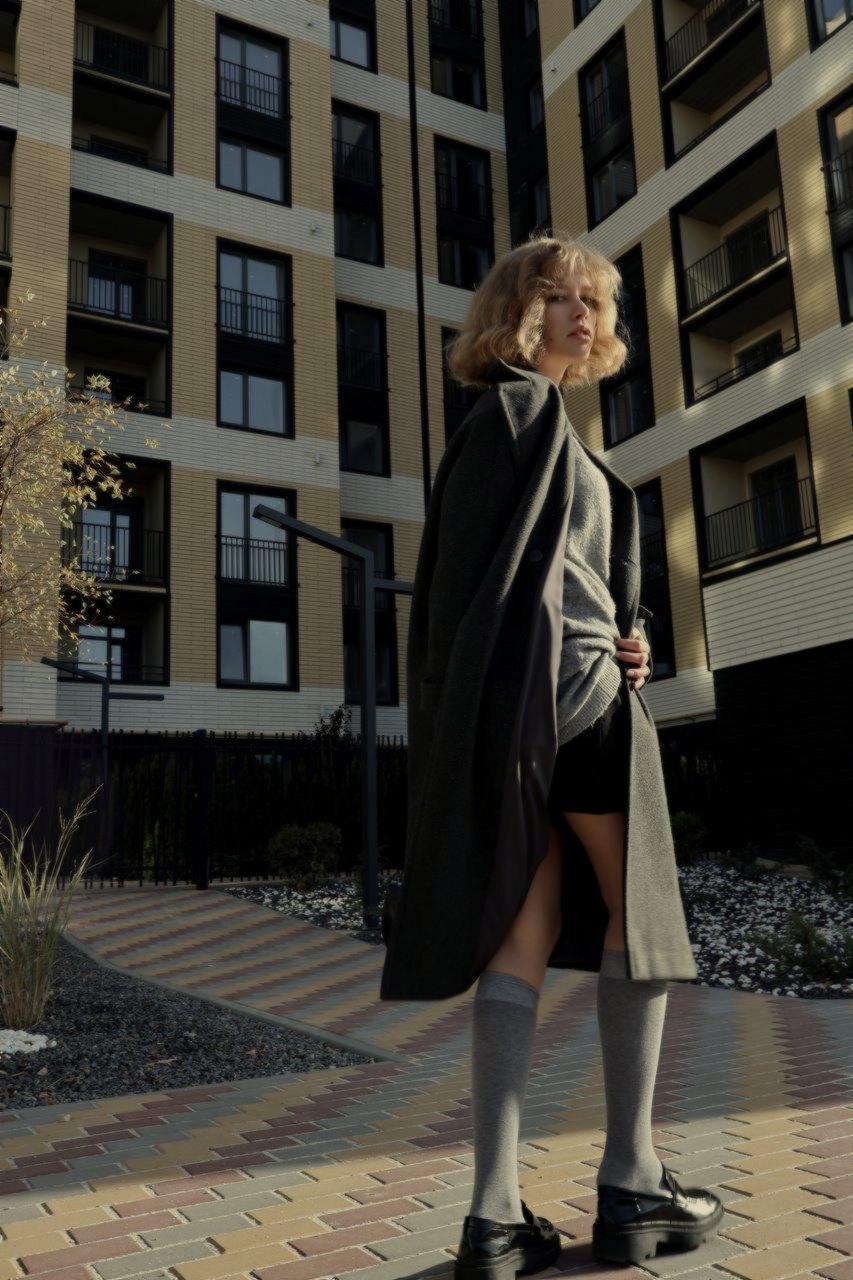
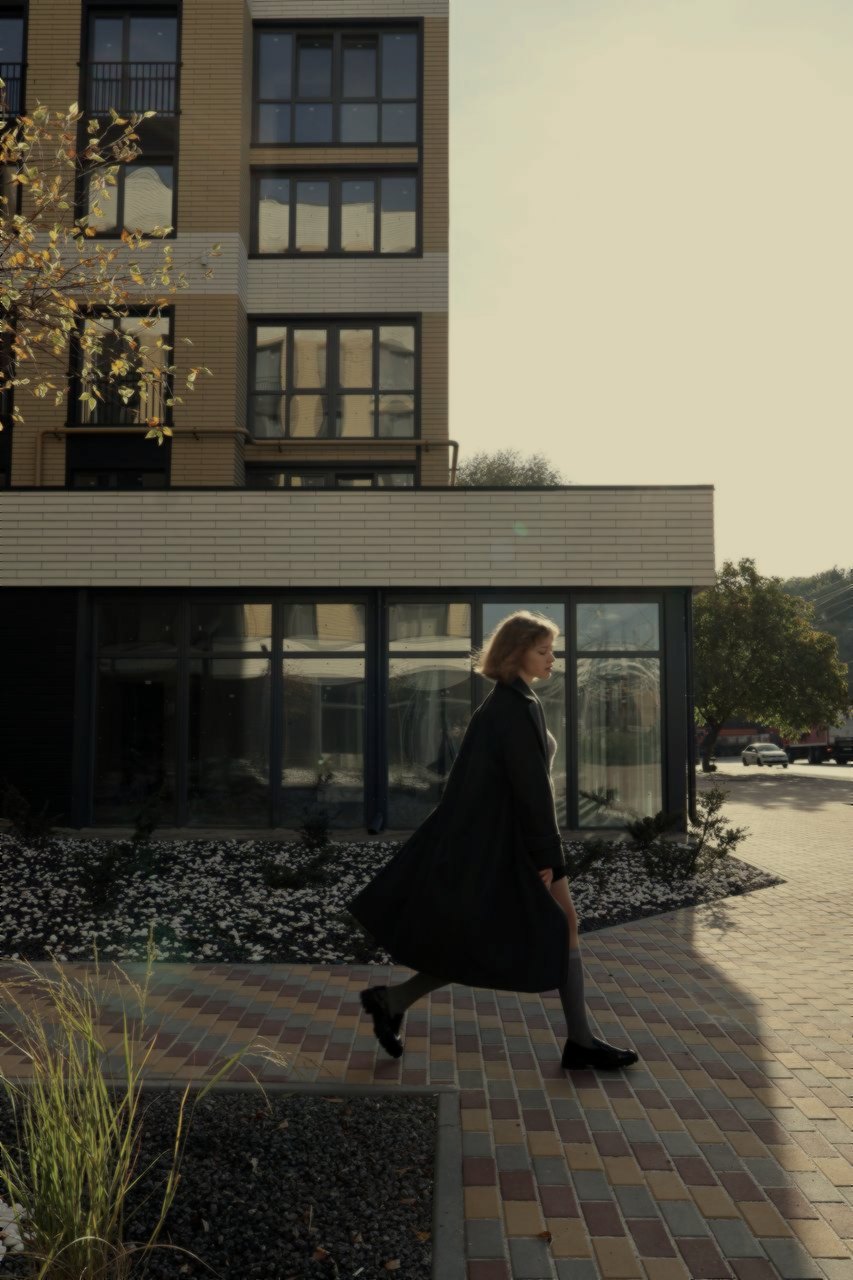
The hem has weather. The path is the set.
By 1984 the long coat had lived two lives. In the seventies it was a cape with sleeves. In the early eighties the industry tried to turn it into armour. This walk refuses the pad.
What meets the decade is the volume: charcoal wool, grey socks left visible, a loafer heavier than the dress. European pages were already bored with the power suit.
The bob is a seventies cut still in circulation, worn without the studio blow-dry. The building is new. The attitude is older.
02
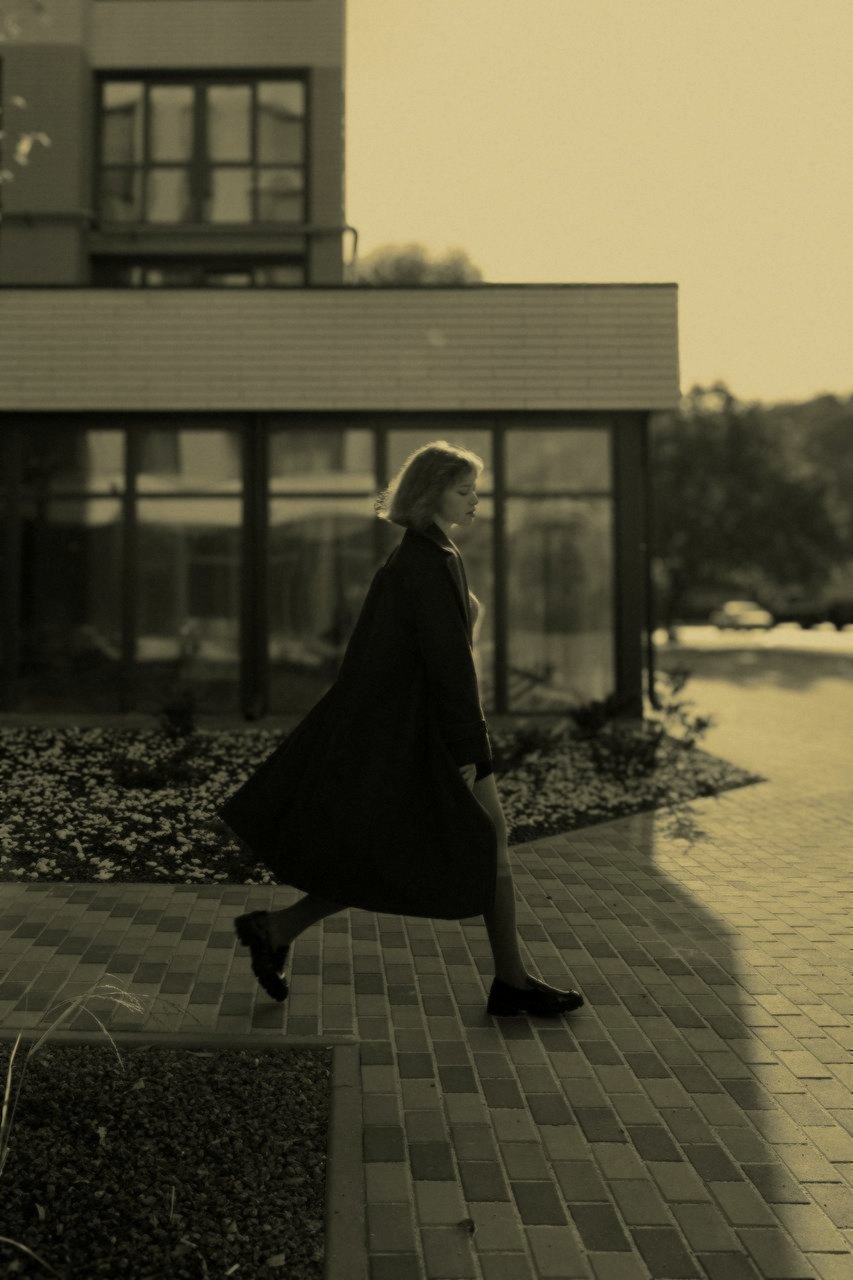
The upper half is the archive. The lower half is the note.
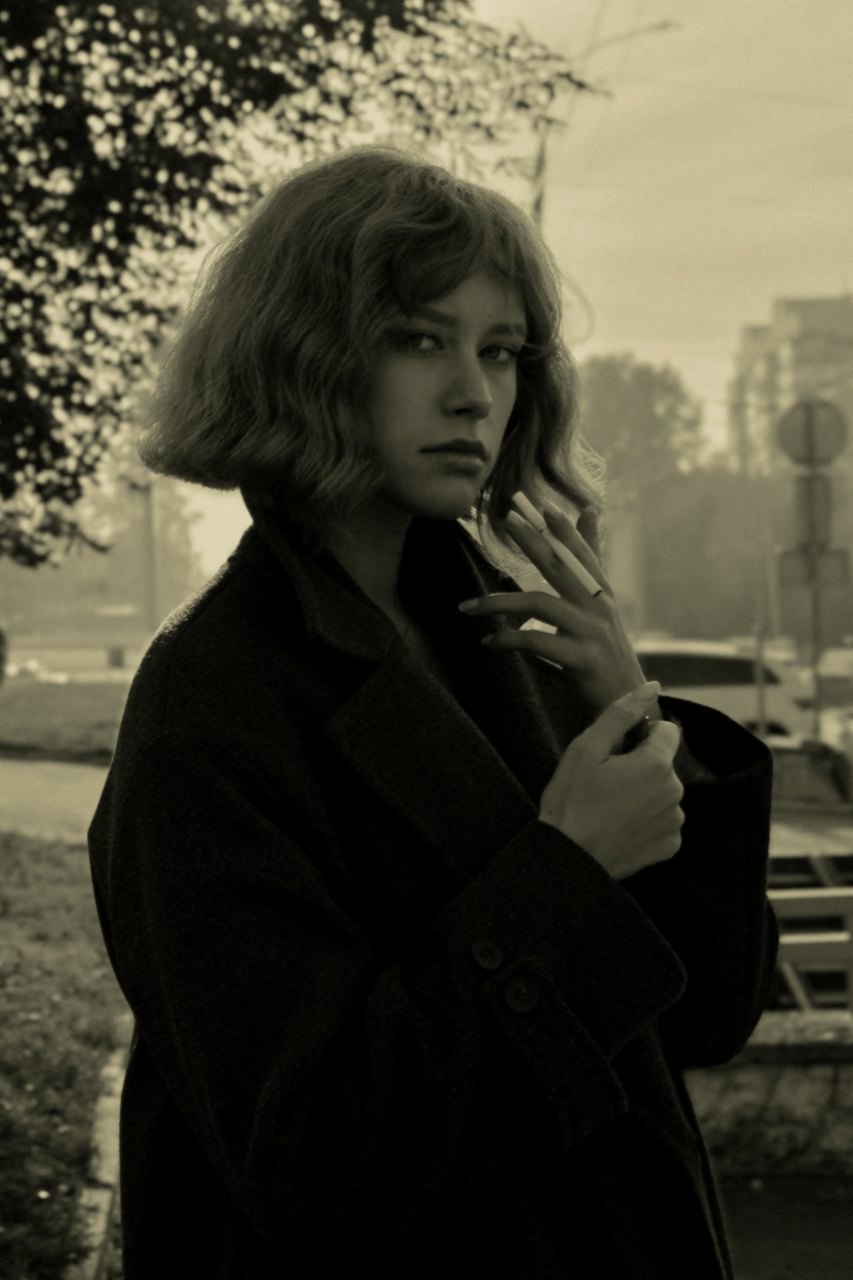
Sepia is how a 1984 desk filed a picture it already loved. The seventies taught magazines to print memory in brown. The eighties kept the habit for anything that should feel already classic. Same hour, other temperature. Not a second of the colour frame.
03
No Flash
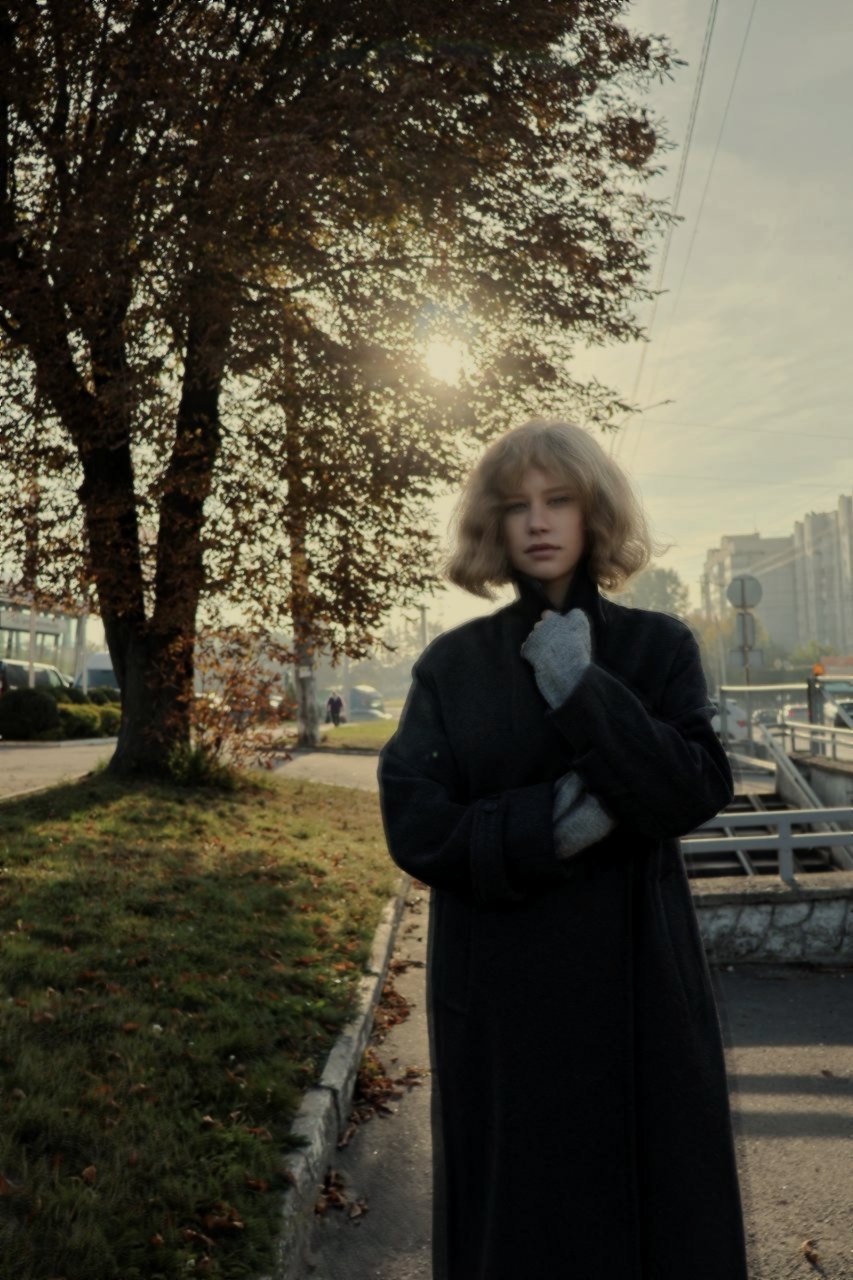
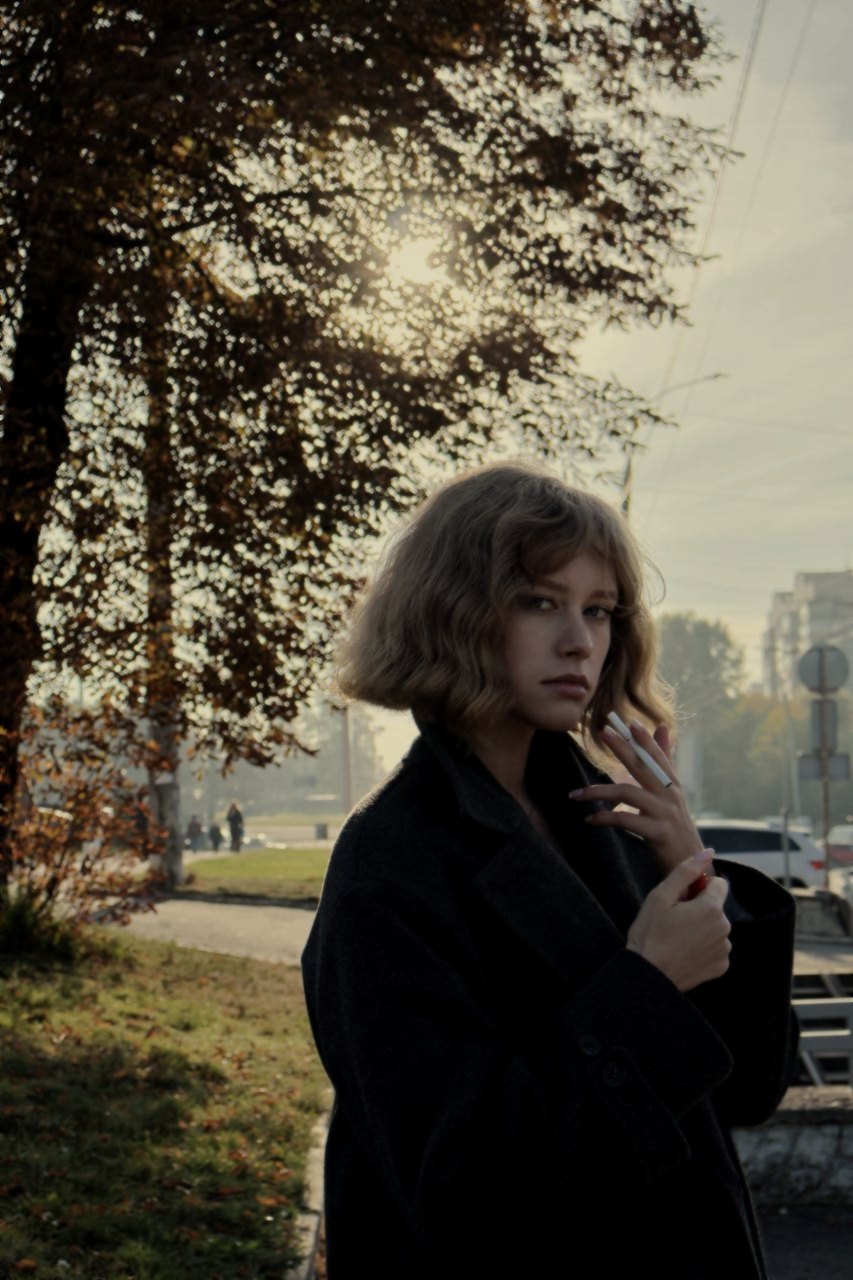
The tree supplies the lamp.
Late-seventies editorials loved a low sun doing the work of a soft box. The eighties moved the same woman onto a white cyc. This frame goes back: railing, grass, no retouch of the city into a studio.
The coat is oversized, almost a blanket — the volume Japanese and Italian street pages wore before Paris put a shoulder pad in it. The face stays level. That is the eighties lesson once the shouting stops.
04
A Prop, Not Advice
Between takes, a cigarette meant the camera had stopped.
From 1976 to 1986 fashion pages used it as punctuation: a hand near the mouth, a collar pulled close, a reason for the portrait to stay still.
What crosses into this model is the pause itself. The coat held shut. The bob unfixed. The street left in the background instead of blown out.
a period prop, not a recommendation.
05
The brown print of the same pause. Filed, not repeated as colour. A prop of the period. The hands do the talking. The face stays level.
06
Street Botany
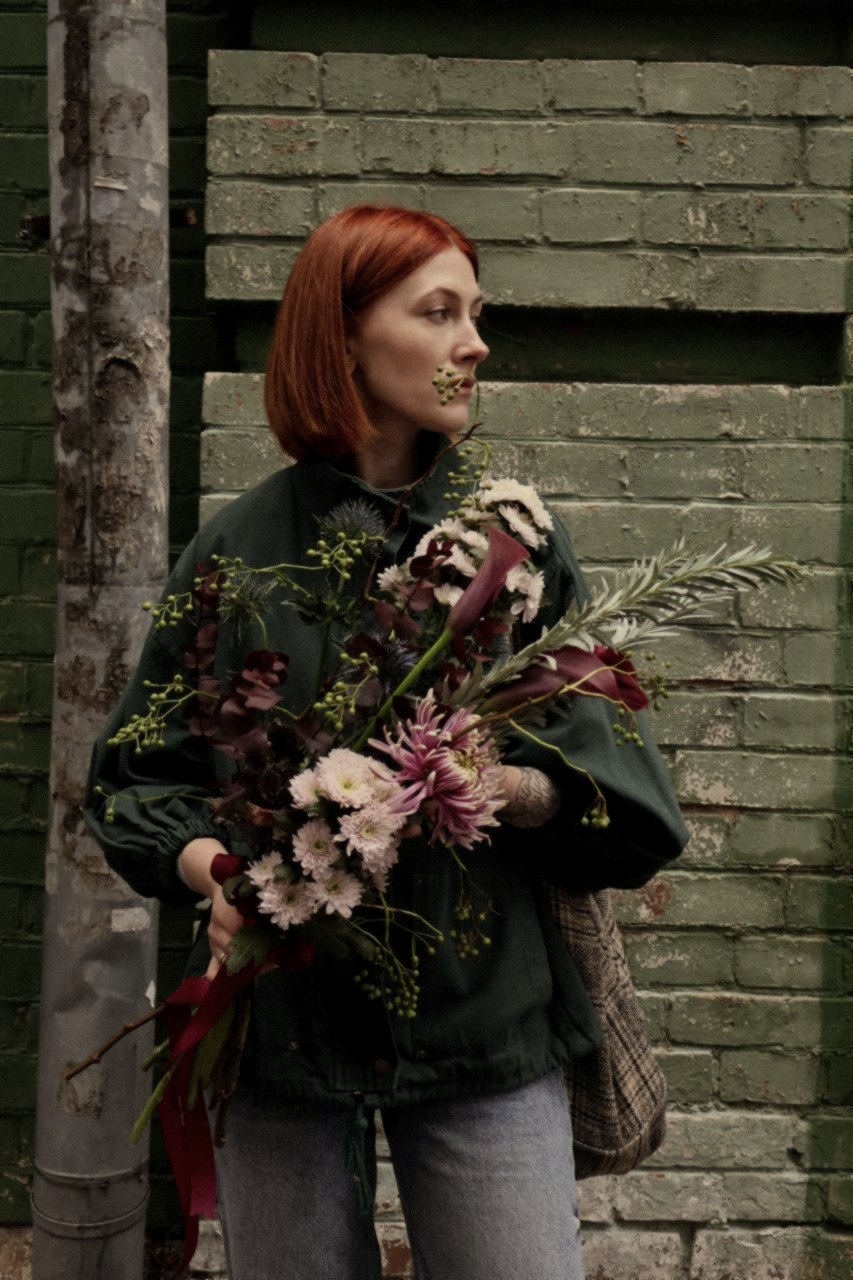
Flowers instead of a handbag.
By the end of the decade a clutch had become a status object. A bunch did the opposite. Late eighties into the early nineties, European issues replaced the accessory with something that wilted.
Red hair is the second masthead. The jacket is workwear. The wall keeps its peeling paint. A leaf at the mouth is how the bunch refuses the studio trolley.

07
A nineteenth-century frame around a later costume.
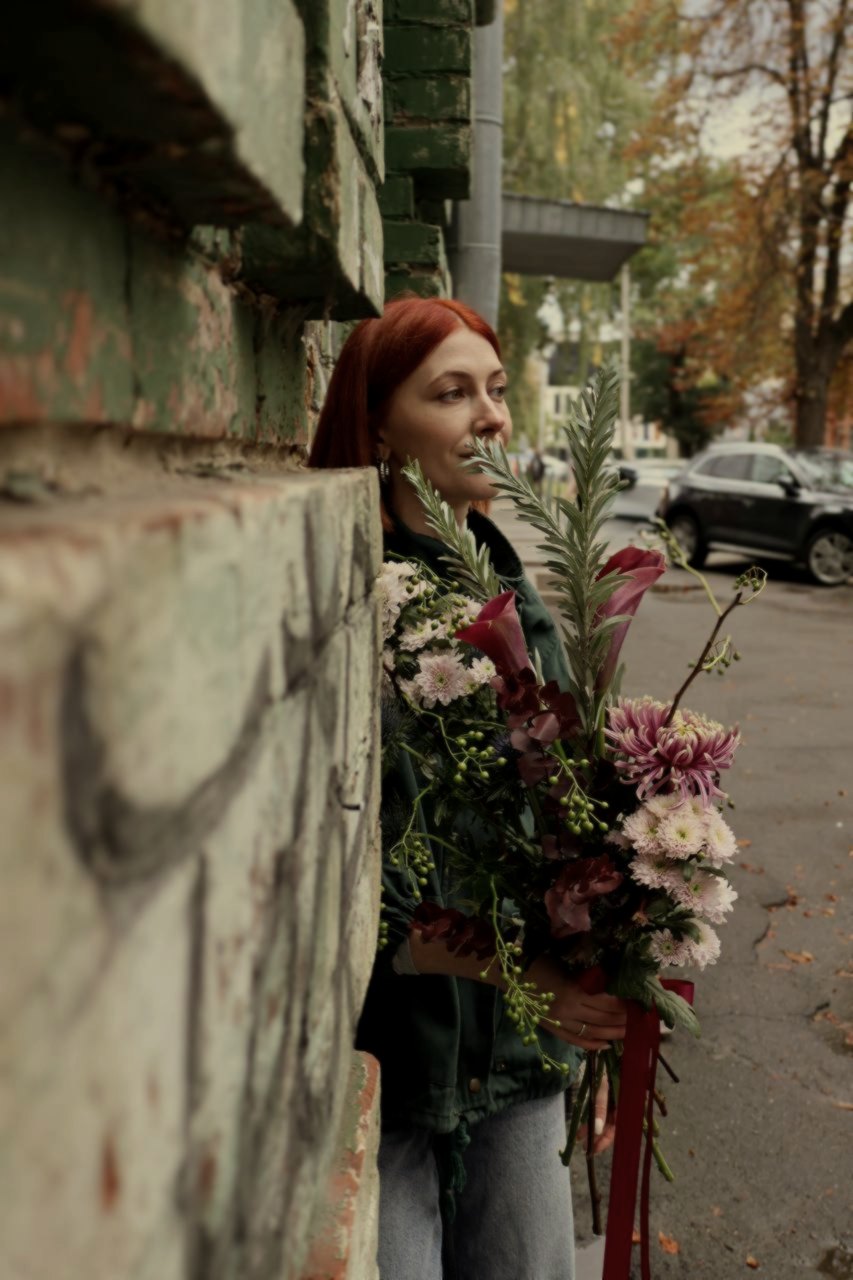
Eighties couture liked a clean plinth. This picture likes a city that has already peeled. Fanlight, bouquet, face last. The corner is its own print, not a crop of this one.
08
The brick does the cropping.
A hiding place, a ribbon out of line, the same jacket and the same bunch without any attempt to make the street look like a set. Nineties order of reading: flowers first, face second.
09
After the fitting, the day did not end at the studio door.
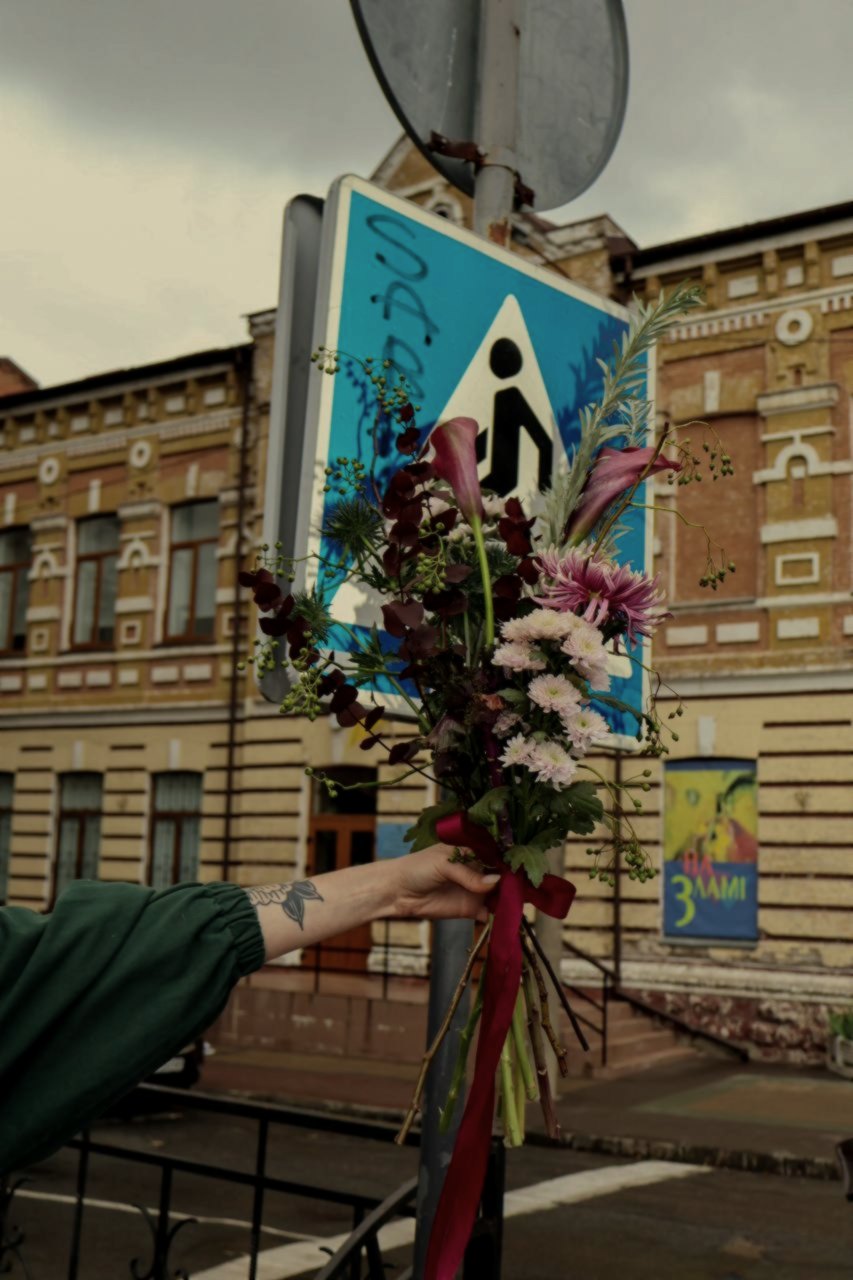
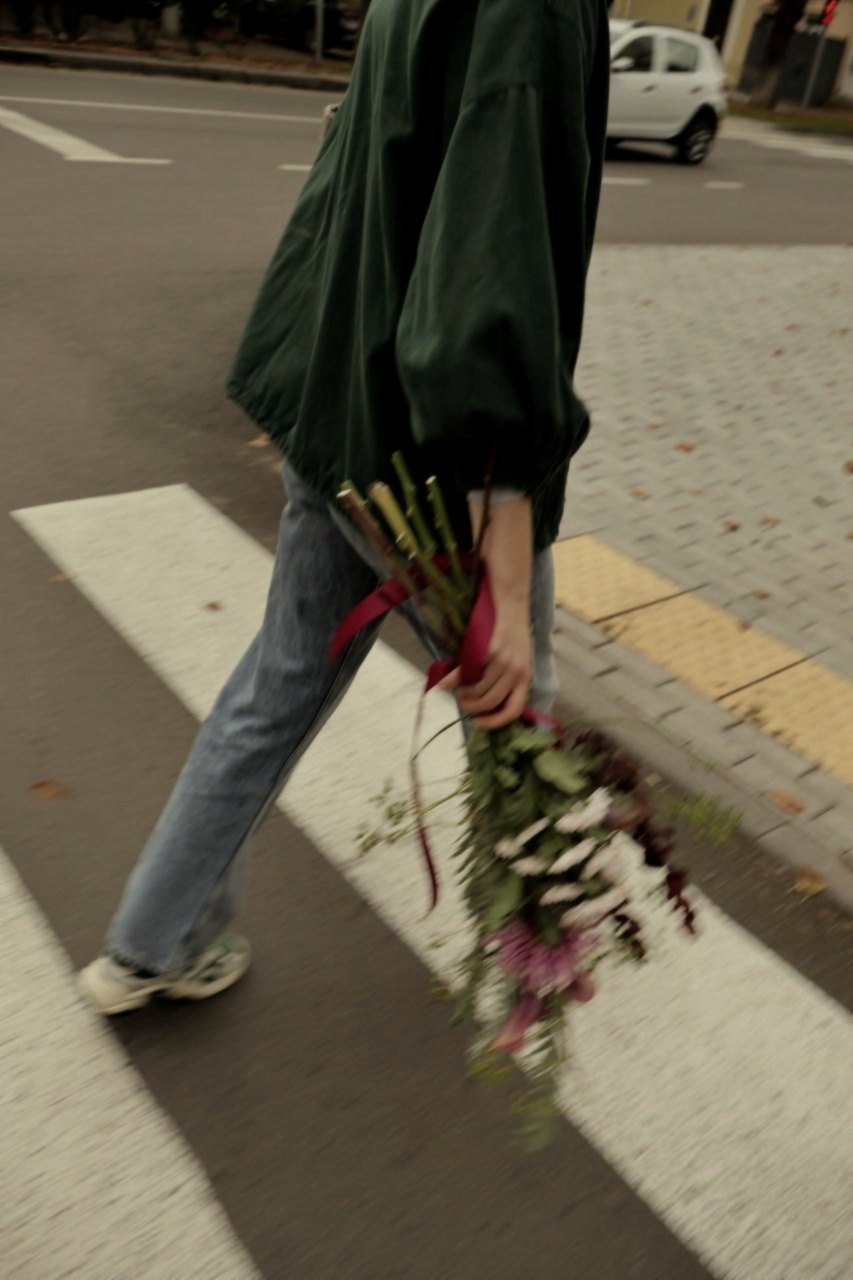
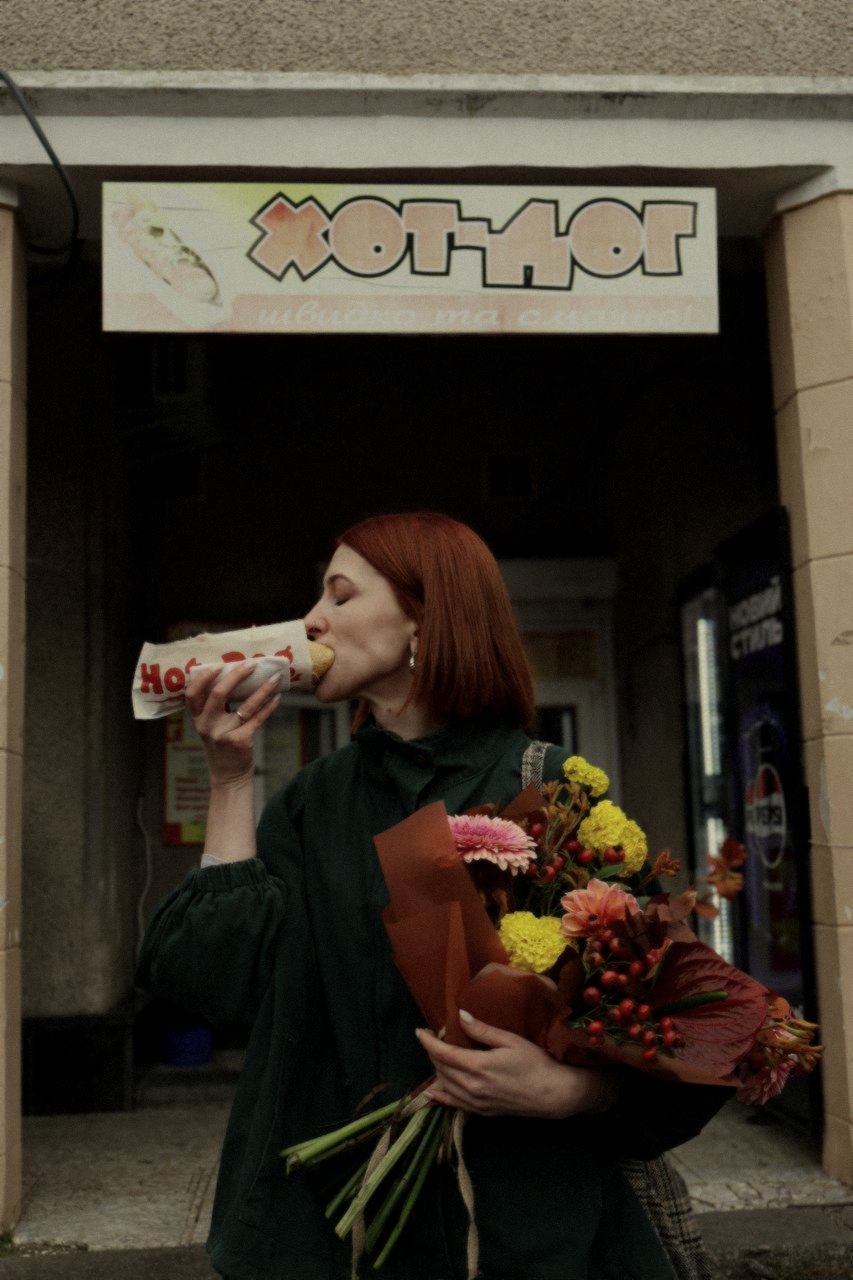
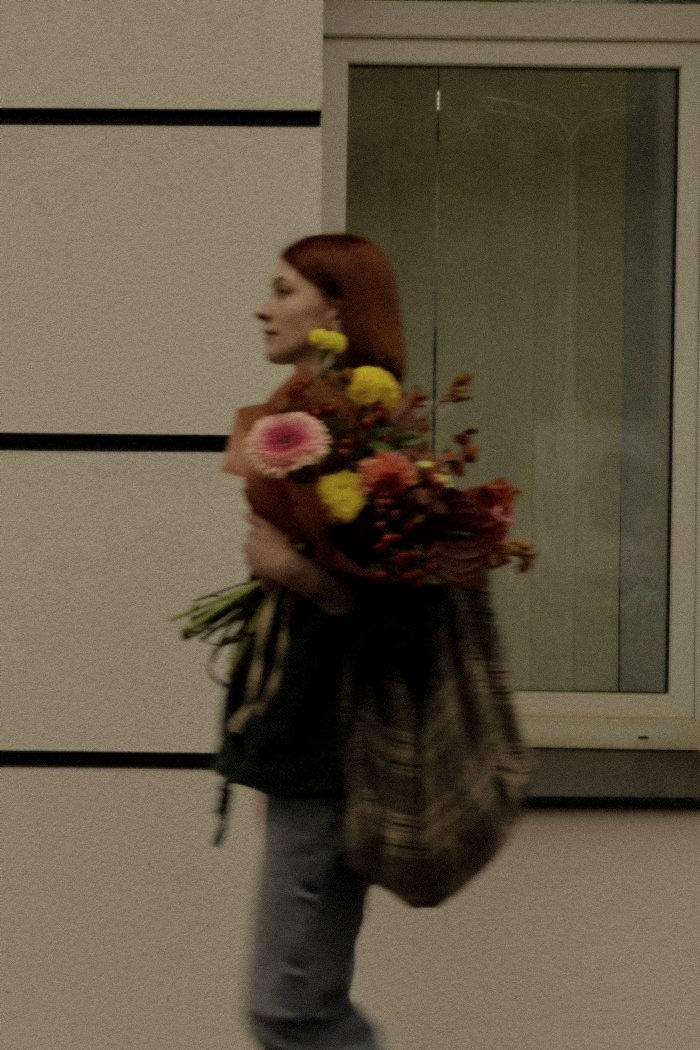
A sign, a crossing, a kiosk, a blur. The bouquet stops being a portrait. The last picture is the early-nineties honesty: do not sharpen what the street already shook.
Couture World · End of Issue